From satellite launches to unmanned aerial vehicles (UAVs), Auckland’s aerospace innovators are shaping technologies that redefine how we move, connect and observe our world.
With its clear skies and broad launch angles, Aotearoa New Zealand has a natural advantage as a launch site for commercial low Earth orbit (LEO) missions. Over the past decade, LEO launch costs have been reduced by a factor of at least 20 compared with shuttle-era baselines, opening the door to a ‘new space’ era powered not just by governments, but by private entrepreneurs and nimble startups.1
In the five years since 2019, New Zealand’s space sector estimated revenue has grown from NZ$1.75 billion to NZ$2.68 billion – a 53 per cent increase, far outpacing global growth of 40.6 per cent and the domestic economy growth of just 8.7 per cent over the same period.2
The advanced aviation sector, which is younger but already making an impact, recorded NZ$0.53 billion in estimated revenue in 2024. Together, both sectors now generate more than NZ$3.2 billion annually and contribute nearly NZ$3 billion to the national GDP.3
As the country’s primary commercial centre, Tāmaki Makaurau Auckland offers the financial, logistical and talent base needed to support complex aerospace projects and connect them to global markets.
Around 45 per cent of New Zealand’s space and advanced aviation organisations are based here, contributing more than NZ$1.21 billion to New Zealand’s GDP and space directly supports an estimated 7,000 full-time equivalent roles4. With renowned space company Rocket Lab leading the charge, and a wave of UAV and space startups following, Auckland is working at pace in aerospace innovation.
Innovation infrastructure and ecosystem strength
For a region of its size, Auckland has built a remarkably sophisticated aerospace ecosystem, with Waipapa Taumata Rau University of Auckland’s Te Pūnaha Ātea – Space Institute at its heart, offering satellite fabrication and testing facilities, clean rooms and a Mission Operations Control Centre.5
“Aerospace is still young as a sector, which means we can be agile and ambitious,” says Professor Guglielmo Aglietti, Director of the Institute. “That flexibility is one of Auckland’s greatest strengths.”
The Institute’s researchers train the next generation of aerospace engineers and spin out startups that quickly find international traction. “Our mission is not just education,” says Professor Aglietti, “it’s about turning research into real-world applications that benefit industry, defence and society.”
Te Wānanga Aronui o Tāmaki Makau Rau Auckland University of Technology (AUT) adds depth in UAV and autonomous systems, while deep-tech incubator/venture funds, such as Outset Ventures, support early-stage companies with capital, labs and prototyping space. And the independent societies Aerospace Auckland and Aerospace New Zealand connect innovators and lobby government on behalf of the sector.
This ecosystem is fuelled by cross-industry strengths in areas such as marine engineering, advanced manufacturing and defence, creating a rich, multidisciplinary environment. As Professor Aglietti points out, “The key is collaboration, between universities, industry and government, to build capability quickly without duplicating effort.”
Public sector and regulatory support
One reason for the rapid progress of Auckland’s space sector is the support of forward-thinking Government policies.
The New Zealand Space Agency, which is part of Hīkina Whakatutuki, the Ministry of Business, Innovation and Employment, set a bold goal in 2024: to double the size of New Zealand’s space and advanced aviation sectors by 2030.6
This goal is supported by facilities such as the Tāwhaki National Aerospace Centre in the South Island, as well as an agile regulatory framework. New Zealand’s licensing for space launches and UAV operations enables companies to test, adapt and grow quickly.
A ‘sandbox’ zone at Kaitorete Spit hosts the Tāwhaki National Aerospace Centre, allowing them to trial advanced aviation technologies in a controlled airspace as part of government and industry collaboration programmes. The Airspace Integration Trials Programme, previously managed by the Ministry of Business Innovation and Employment (MBIE), supported the safe testing, development and market validation of advanced uncrewed aircraft in New Zealand. Another initiative in regulation is a cooperation agreement with the US Federal Aviation Administration, which recognises certain overseas licences and so cuts red tape.7
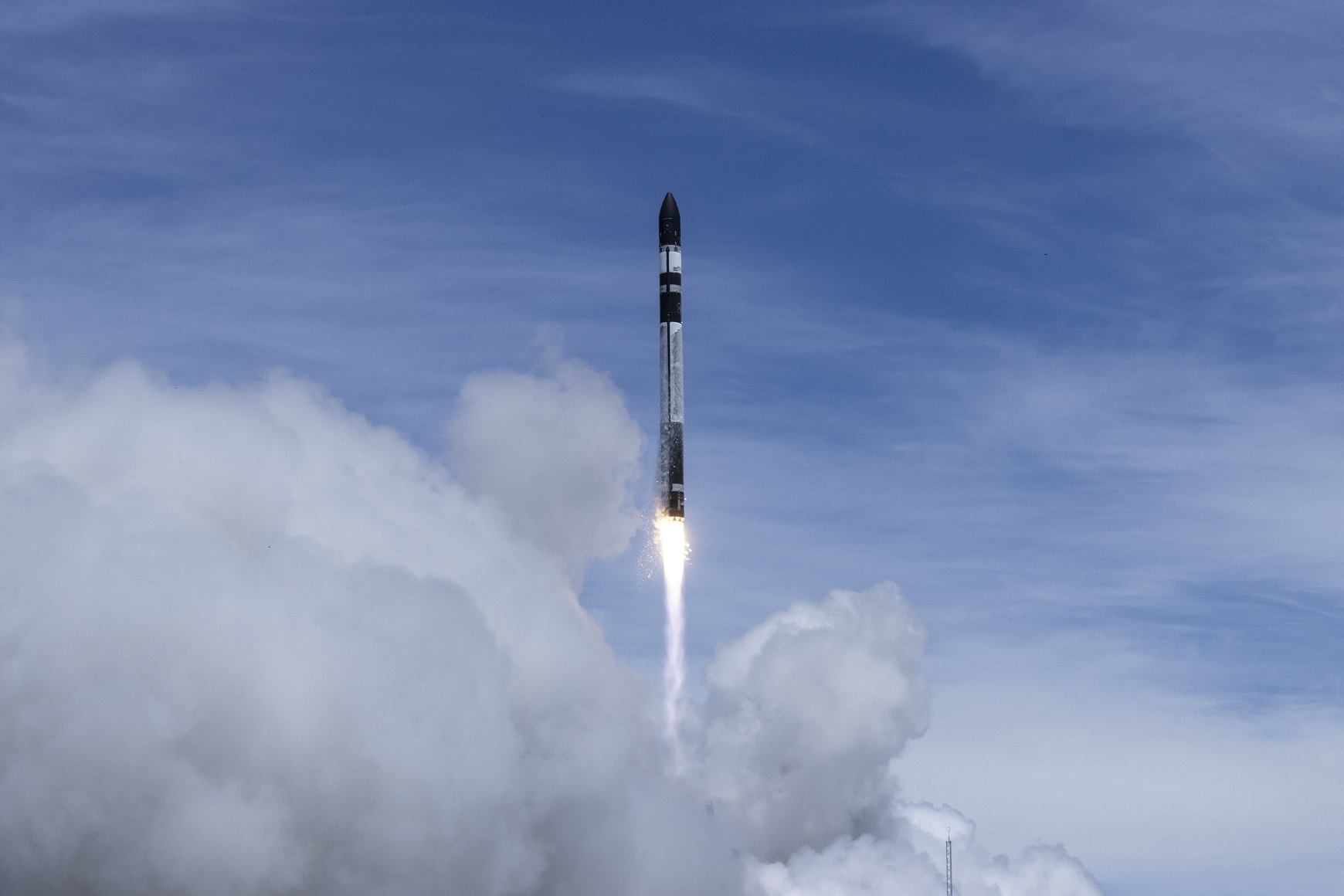
Photo credit: Rocket Lab
People, talent and cultural mindset
While the regulatory environment is supportive, Auckland’s people are at the heart of its aerospace success. The workforce is overwhelmingly homegrown, with the majority of space organisations reporting their staff are from New Zealand.8
Auckland’s universities also provide deep expertise in engineering, artificial intelligence, materials science and aviation training. The Space Institute offers an undergraduate Aerospace Engineering specialisation, available as a minor within the Bachelor of Engineering with Honours. And the Space Institute and Te Whare Wānanga o Waitaha University of Canterbury both offer dedicated master’s programmes in aerospace engineering.9
Alongside this, international researchers and founders – including Catherine Qualtrough and Dr Priyanka Dhopade from the University of Auckland, Professor Aglietti and his compatriot Professor Roberto Armellin at the Space Institute, Dr Ben Taylor and Dr Jason Shore from Frond Space Systems (which has grown out of the Space Institute), and Max Arshavsky and Sebastian Wieczorek who founded Zenno Astronautics – highlight Auckland’s globally connected talent base.
This mix of local skills, cultural diversity and global know-how gives Auckland a unique edge: a sector built on homegrown talent while staying connected to the latest ideas and technology from around the world. “It’s the combination of local ingenuity and global perspective that makes Auckland special,” says Professor Aglietti.
Commercialisation and export strength
In 2024, nearly 29 per cent of New Zealand’s space revenue came from exports, with markets from the United States and Europe to India, Japan, and Korea.10 Advanced aviation firms exported 16 per cent of their revenue, particularly to the United States and Australia.11
Behind this export strength is a vibrant investment scene. Venture funds, such as Nuance, Global From Day One (GD1), Outset Ventures and Icehouse Ventures, are helping startups grow.
These include local companies such as Zenno Astronautics, innovators in superconducting magnets for space applications, born out of the University of Auckland’s Velocity Programme; Astrix Astronautics, which has tested its solar arrays on a Rocket Lab mission; and EMROD, which is pioneering long-range wireless power transmission.
Auckland’s strength is not only in startups but also in the advanced manufacturers supplying them, such as Zenith Technica and Fi Additive (both specialists in additive manufacturing), and C-Tech, which supplies the aerospace sector with carbon fibre components.
Rocket Lab remains a cornerstone of the local and global aerospace sector, operating an R&D facility in Auckland and supporting more than 2,500 New Zealand suppliers.12 Its success has put Auckland on the global space map, inspiring the next wave of founders and engineers.
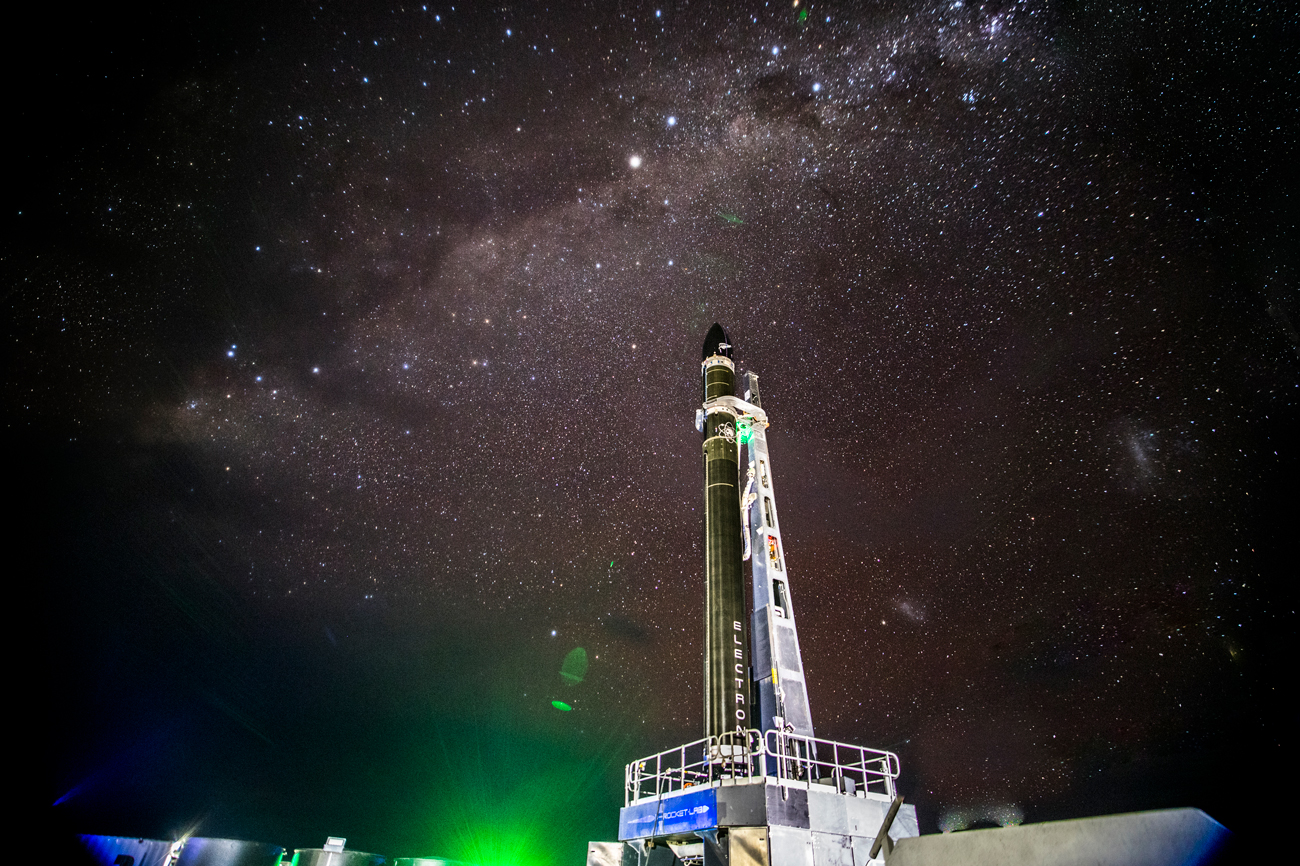
Photo credit: Rocket Lab
Challenges and opportunities
Like any young industry, Auckland’s aerospace sector faces challenges, from expanding infrastructure and attracting growth capital to overcoming supply chain and geographic constraints.
Yet these challenges present opportunities. Auckland is well placed to lead in sustainable fuels, advanced propulsion, AI-assisted airspace management, and autonomous flight.13 As Professor Aglietti notes: “If we focus on our niches – where we can be world leaders – the opportunities are enormous.”
Why invest in Auckland aerospace
Auckland offers a rare combination of technical depth, cultural creativity, regulatory agility and lifestyle appeal. Companies can test, scale and export from a globally connected hub with a rich heritage of exploration.
Professor Aglietti says: “Aerospace is highly multidisciplinary. In Auckland, we can easily connect with other expertise – design, manufacturing, telecommunications – with government and the New Zealand Space Agency, without layers of bureaucracy.
“As the country’s largest region, Auckland has the critical mass of skills and industries that complement aerospace,” he concludes, “and it’s well connected to the rest of the world. This puts us in a good position to make a unique contribution to the global space sector."
Footnotes
- Auckland Council. Invest: Aerospace – Sector overview.
- Deloitte Access Economics & Space Trailblazer (2025). Innovation for growth: Charting the Space and Advanced Aviation sectors (A report commissioned by the Ministry of Business, Innovation and Employment (MBIE)).
- Deloitte Access Economics & Space Trailblazer (2025). Innovation for growth: Charting the Space and Advanced Aviation sectors
- Deloitte Access Economics & Space Trailblazer (2025). Innovation for growth: Charting the Space and Advanced Aviation sectors
- University of Auckland. (2025). Te Pūnaha Ātea – Space Institute: Facilities overview.
- MBIE. (2024). New Zealand Space and Advanced Aviation Strategy 2024–2030
- MBIE. (2023). New Zealand–Federal Aviation Administration (FAA) Memorandum of Cooperation.
- Deloitte Access Economics & Space Trailblazer (2025). Innovation for growth: Charting the Space and Advanced Aviation sectors
- University of Auckland. (2025). Te Pūnaha Ātea – Space Institute: Programme information.
- Deloitte Access Economics & Space Trailblazer (2025). Innovation for growth: Charting the Space and Advanced Aviation sectors
- Deloitte Access Economics & Space Trailblazer (2025). Innovation for growth: Charting the Space and Advanced Aviation sectors
- Ramsay, S. (2023, October 11). Productivity — it turns out it’s rocket science. Otago Daily Times.
- Auckland Council. Invest: Aerospace – Sector strengths.